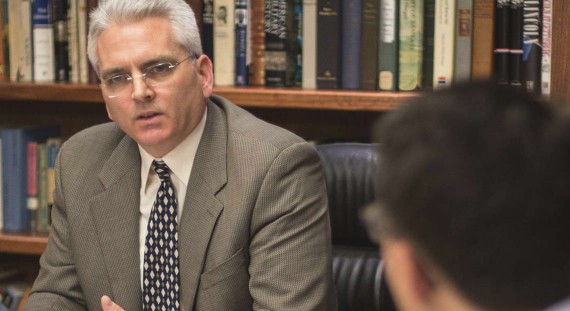

The director of Elmbrook, Kevin Majeres MD, talks about the science of optimal work. This audio was recorded during a Focus Talk last September.
If you want to download the MP3, click here.
An important element of professionalism is one’s motive for working. There are several distinct possible motives; some are good and proper while others are not. Having the wrong motive--usually self-centered--can easily lead to professional work that is poorly done and even at times to work that is harmful to the client/patient/customer. These bad motives can also lead persons to act unethically within their professional work. On the other hand, a good motive usually leads not only to work that is well done and of real service to others, but also tends to be more personally fulfilling for the professional. Hence it is important to reflect on one’s motive in working.
Despite the obvious differences among the various professions, it is possible to identify certain characteristics and qualities that are generally shared by all those who are highly respected within their profession and whom we would recognize as good professionals. We can call the whole set of these qualities professionalism.
In this section we present the basic understanding of the professions and professional life that underlies Elmbrook's programs. Our programs aim to transmit this view of professional life to students and prepare them to take on the responsibilities which it implies.